
I make prototypes

Who am I
Briefly, I create prototypes. I am located next to Lassouts, 12500. I build robots and automate things. I handle software, firmware, electronics, CAD, 3D printing, and everything in between.
I have lent my expertise to diverse fields including finance, logistics, software environments, and electronics companies. Connect with me via LinkedIn.
What is a prototype
Building a prototype is the critical first step in realizing a product, machine, or tool. The primary goal is to do research and development to prove a concept, and gain immediate operational understanding over a system.
Prototyping is inherently rapid; the objective isn't absolute initial perfection, elements such as safety, user experience, and long-term reliability are continuously iterated over to perfect the situation.
It demands deep and wide cross-disciplinary skills across electronics, mechanics, and software engineering. Knowing what technology, manufacturing process to use is key to ensure the best path is followed.
How I build prototypes
Building a prototype is first and foremost to de-risk and validate assumptions; That means testing often, and failing quickly, rather than during integration when mistakes costs more.
Hardware
Requirements
To iterate quickly, ideas are sketched out rapidly so constraints and specifications can be mapped out immediately.
Choosing Components
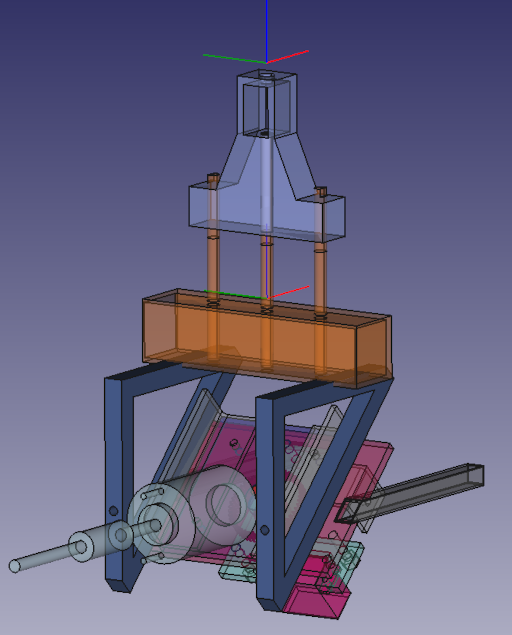
Sourcing off-the-shelf components is critical. Custom-machined components are expensive and time-consuming; leveraging existing components accelerates time-to-proof.
Manufacturing
Depending on the need, manufacturing is optimized using any process that has the best chance to be cost effective and quick, from 3D printing, milling, turning, laser/plasma cutting, or sheet bending, whatever process as long as the solution works.
Electronics
Power Architecture
Power dictates critical system design, thermals, current pathways, connectors, clearances, and EMI performance.
Sensors
There are so many types of sensors today, from old schools, to MEMS, which make integration so much simpler, and complex at the same time. Looking at availabilities, and researching the best sensor is a time consumming but probably the most important step in the whole prototyping.
Manufacturing
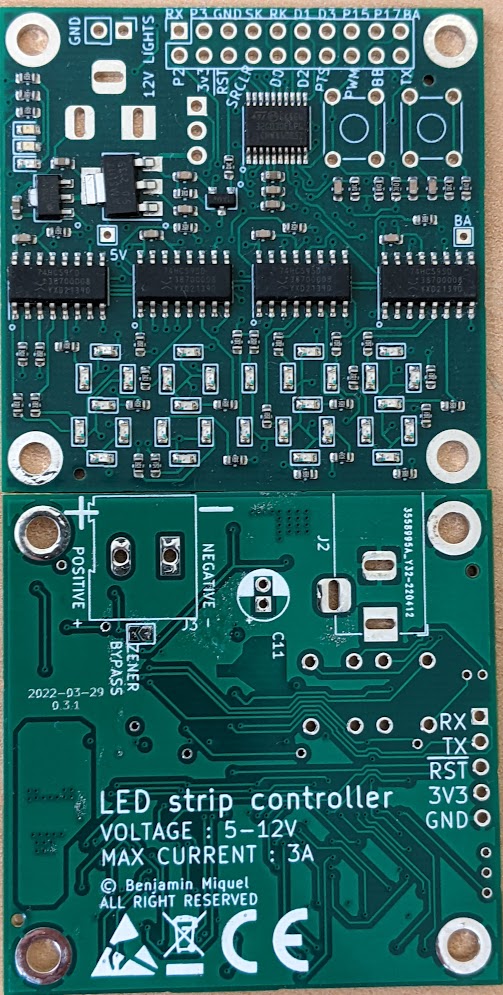
End-to-end management: PCB design, assembly, wire harness building, schematic design, component supply chains, and surface-mount debugging.
Software
Controller
The brain of automation. Developing deterministic state machines, exact process sequencing, sensor calibrations, and continuous integration testing.
Drivers
Writing native drivers across primary communication buses (SPI, I2C, CAN, Ethernet, UART, DMA) and using logic analyzers to resolve hardware bugs.
High-Level Systems
Tying the ecosystem together. Utilizing data analysis pipelines, scripting, custom web frontends, and utility scripts to build unified tech stacks.